The manta ray night dive and snorkel off Kona is one of the most reliable wildlife encounters on the planet, and it has become a victim of that very reliability. On a busy night at the two main viewing sites, dozens of boats and a crowd of snorkelers and divers converge on the same patch of dark water, drawn by the near-certainty of seeing giant rays feed under the lights. For years there were no real rules governing any of it. The state has been trying to change that, and the proposal on the table could reshape the business.
For the smaller operators who run intimate, careful trips, the proposed regulations are not an abstract policy matter. They speak directly to a problem these operators have been complaining about for a long time, and they would formalize a way of working that the careful crews already follow by choice.
A Free-for-All at Two Tiny Sites
Almost all the action happens at two locations in the West Hawaii waters, the sites commonly known as Garden Eel Cove and Keauhou Bay. The mantas gather there to feed on plankton drawn by lights, and the tour fleet gathers to show them off. The state’s boating division has estimated that 60 to 70 vessels, ranging from outrigger canoes to boats carrying 50-plus passengers, work these sites, and the result is overcrowding, safety concerns, user conflicts, and environmental pressure, all of it essentially unregulated.
The proposed rules would impose structure on that chaos for the first time. The most consequential provisions are hard caps. According to Scuba Diving’s reporting on the proposal, the rules would allow up to 24 commercial boats to bring a total of 60 passengers to each site per day, with viewing hours defined from 4 p.m. to 4 a.m. Those numbers would replace the current free entry with a permitted, limited system, the first of its kind in Hawaii.
Beyond the caps, the proposal layers on safety and accountability requirements: a dedicated manta-viewing permit with a monthly fee, vessel safety measures like propeller guards or designated lookouts, a prohibition on fishing in the zones during viewing hours, a required capital letter M displayed on both sides of participating boats, and stiff penalties for operators who break the rules. It is a comprehensive attempt to turn a crowded, ad hoc scene into a managed one.
Why the Careful Operators Are Watching
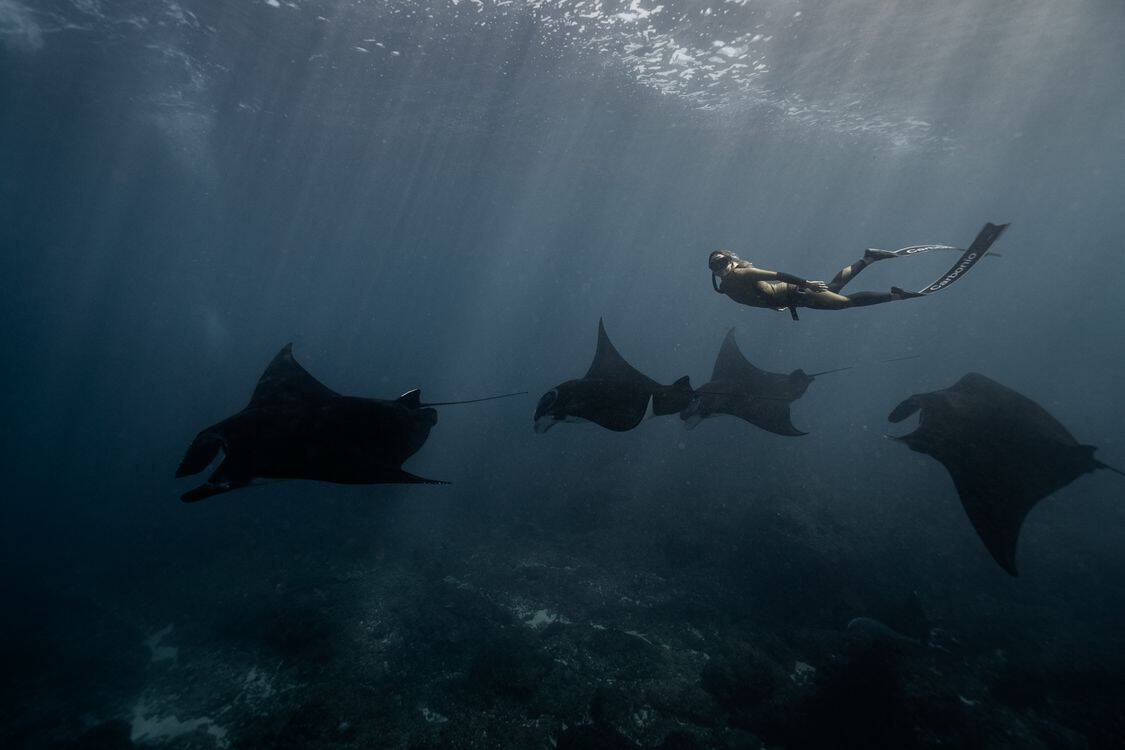
It would be easy to assume every tour operator opposes new restrictions, but the picture is more nuanced. The crowding the rules target is a genuine safety hazard, and the operators who already run small, well-controlled trips have been among the loudest voices warning about it for years. When 60 or 70 boats crowd two small sites, the risk to guests and to the mantas rises for everyone, including the responsible crews who had nothing to do with creating the crush.
For a small-group operator, much of the proposal simply codifies how they already behave. They already run modest passenger numbers. They already prioritize safety equipment and careful in-water management. A rule capping passengers and demanding propeller guards is not a burden to a crew that voluntarily caps its own groups and guards its own props; it is a leveling of the field that stops higher-volume, lower-care competitors from undercutting them while degrading the very experience everyone is selling.
That said, operators who testified on the rules did raise objections to specific provisions, even as they agreed on the two things that matter most: protecting the hāhālua, the manta ray, and protecting public safety. The disagreement is about mechanism, not about whether the status quo is acceptable. Almost no one defends 70 boats on a tiny site as a good arrangement.
A Rulemaking That Will Not End
The catch, and it is a significant one, is that these rules have been proposed, not adopted. The effort to regulate manta viewing in West Hawaii has dragged on for more than a decade, originating in a legislative resolution years ago and grinding through an administrative process with many separate steps, public hearings, and recurring obstacles. As of the most recent coverage, the rules remained proposals awaiting finalization, not enforceable law.
That long delay is itself part of the story. A decade-plus of discussion without adopted rules has meant that the crowding problem everyone acknowledges has gone unaddressed in any binding way, leaving the careful operators to self-regulate while the overall scene stays unmanaged. The proposal’s specifics, the boat caps and passenger limits and safety mandates, represent the most concrete attempt yet to fix that, but until they are formally enacted they remain a blueprint rather than a rulebook.
For a visitor weighing a Kona manta ray night snorkel, the live debate is a useful lens. It highlights exactly the variables that distinguish a good operator from a crowded one: group size, safety equipment, careful in-water management, and respect for the animals. Those are the things the proposed rules would eventually require of everyone, and they are the things the best operators already deliver. Until the rules are real, the responsibility for choosing well sits with the person booking, and the manta-viewing debate is essentially a printed list of what to look for.