For years, hardscape near a home’s foundation was a design choice. In large parts of San Diego, it’s now a legal requirement, and the deadline for existing homeowners to comply is closing in.
California’s long-anticipated “Zone 0” defensible space standard formally took effect for new construction in February, and the city has started actively notifying property owners about what it means for the five feet closest to their homes.
How Much of San Diego This Actually Touches
This isn’t a fringe rule affecting a handful of hillside properties. Roughly 142,571 acres, or two-thirds of San Diego property, lies within designated Very High Fire Risk Severity Zones, according to the city’s own announcement of the requirement.
New structures built in those zones must already comply. Existing homeowners have until February 2027 to meet the standard, which requires the area within five feet of a structure, including under decks, stairs, and attached elements, to be free of flammable material. The city has explicitly listed the approved alternative: hardscape materials such as concrete, gravel, pavers, or bare soil.
Why This Reframes Pavers From Aesthetic to Structural
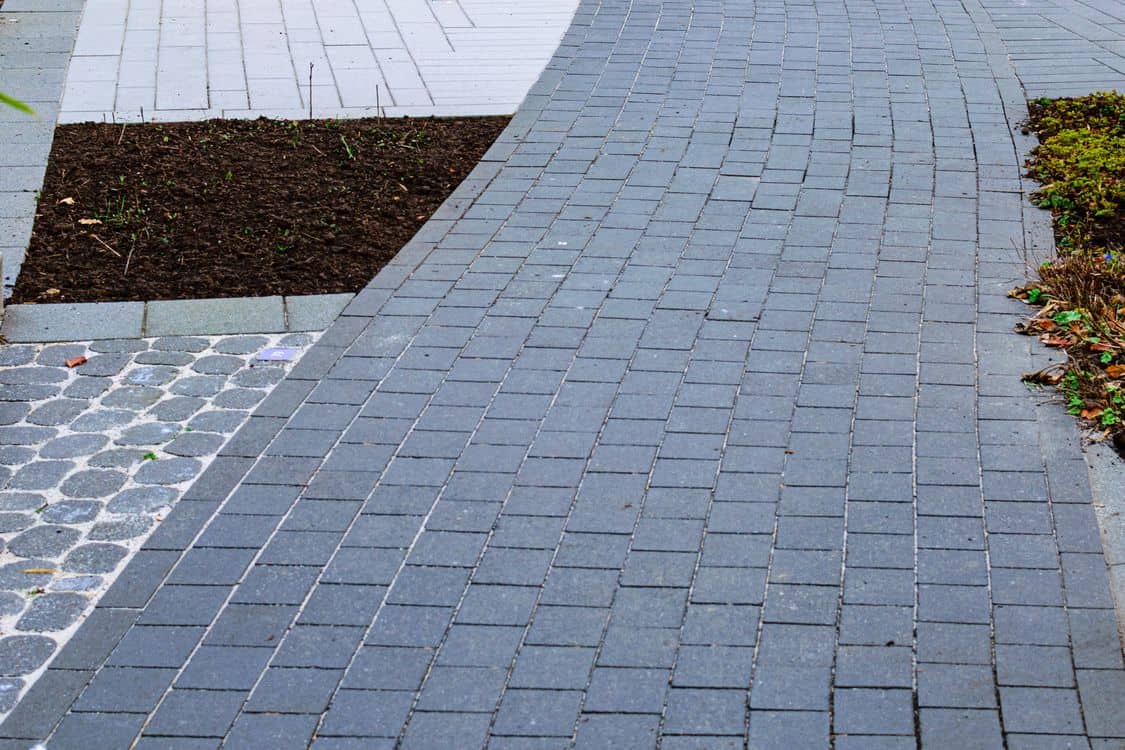
The research behind the rule is specific. Wind-driven embers, not direct flame contact, ignite most homes lost in wildfires, and they do it by finding combustible material immediately adjacent to a structure: mulch, dry plantings, wood fencing attached to the house, stored firewood. A five-foot ring of hardscape removes that fuel entirely.
That changes the calculus for a lot of San Diego properties where planting beds, bark mulch, or decorative wood elements currently run right up against the foundation. A homeowner in a Very High Fire Severity Zone isn’t just choosing pavers because they photograph well. They’re closing a documented ignition pathway that state fire researchers have identified as one of the most common ways homes actually burn.
Not every material qualifies equally. Loose gravel and dense pavers meet the standard cleanly. Decorative bark and wood mulch, both common in foundation planting beds, do not, regardless of how attractive or drought-tolerant the surrounding landscaping is.
What Homeowners Are Actually Doing About It
The compliance window gives existing homeowners roughly a year of runway, which is prompting a specific kind of project: not a full backyard renovation, but a targeted five-foot perimeter conversion around the base of the house, often paired with whatever larger paver or hardscape work a homeowner was already planning.
“We’re seeing more clients ask us to extend a paver project those extra few feet right up to the foundation, specifically because of Zone 0, even when that wasn’t part of the original scope,” says Arc Design Landscape, a San Diego design-build firm that handles hardscape and paver installations across the county. “It’s usually a small add to a bigger job, but it’s become a standard conversation on almost every estimate now.”
That pairing makes practical sense. Base preparation, material sourcing, and installation crews are the same whether a homeowner is doing a five-foot perimeter or a full patio, so many are folding the Zone 0 requirement into a broader hardscape project rather than treating it as a separate, smaller job.
The city has been clear that enforcement will lean on education before penalties, at least initially. But with two-thirds of the city’s property inside the affected zones and a hard compliance date on the calendar, “eventually” has turned into “this year” for a meaningful share of San Diego homeowners.